product study · own product · 3D design tool
Piper
Piper is not CAD. Parts snap together at their connection points like building blocks: mount the boilers and pump groups, click a free port, pick a fitting. The tool routes the pipe, checks every joint and keeps a running bill of materials with real article numbers.
- type
- own product
- year
- 2026
- status
- prototype
- role
- solo, design and build
Sneak peek
-
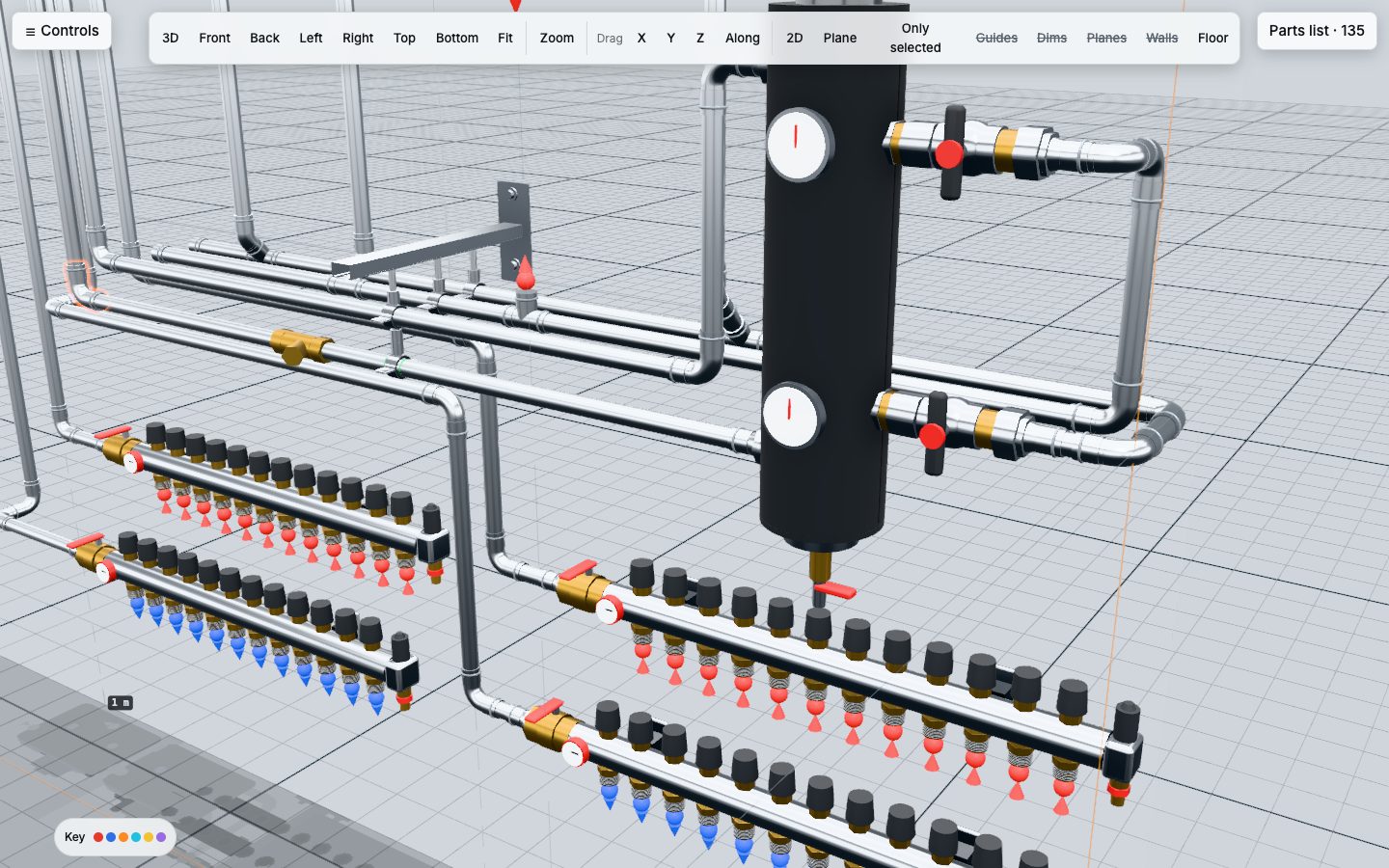
01 · Close-up: press fittings, valves, hydraulic separator and wall support -
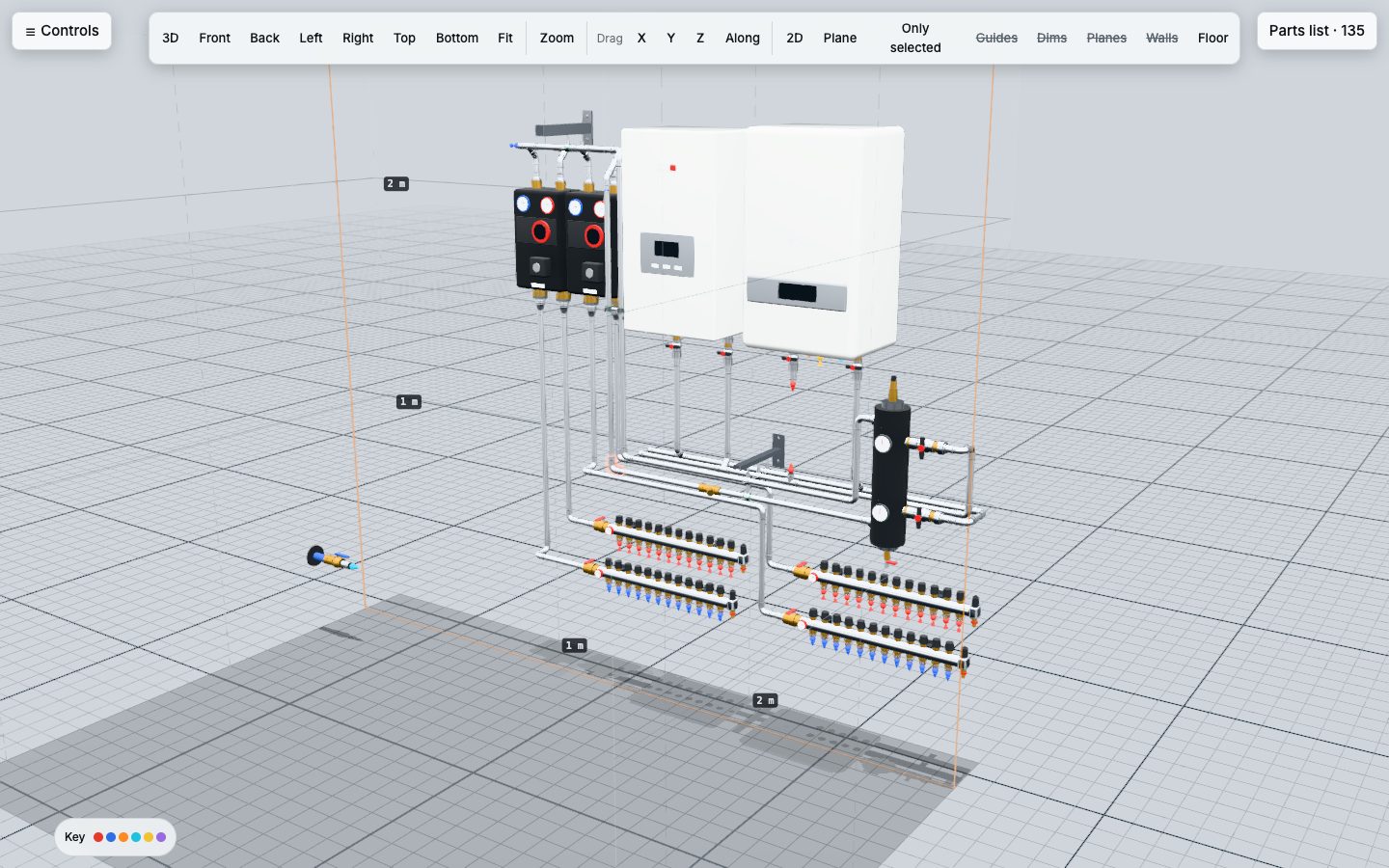
02 · A boiler room in 3D: two boilers, pump groups, separator and four manifolds -
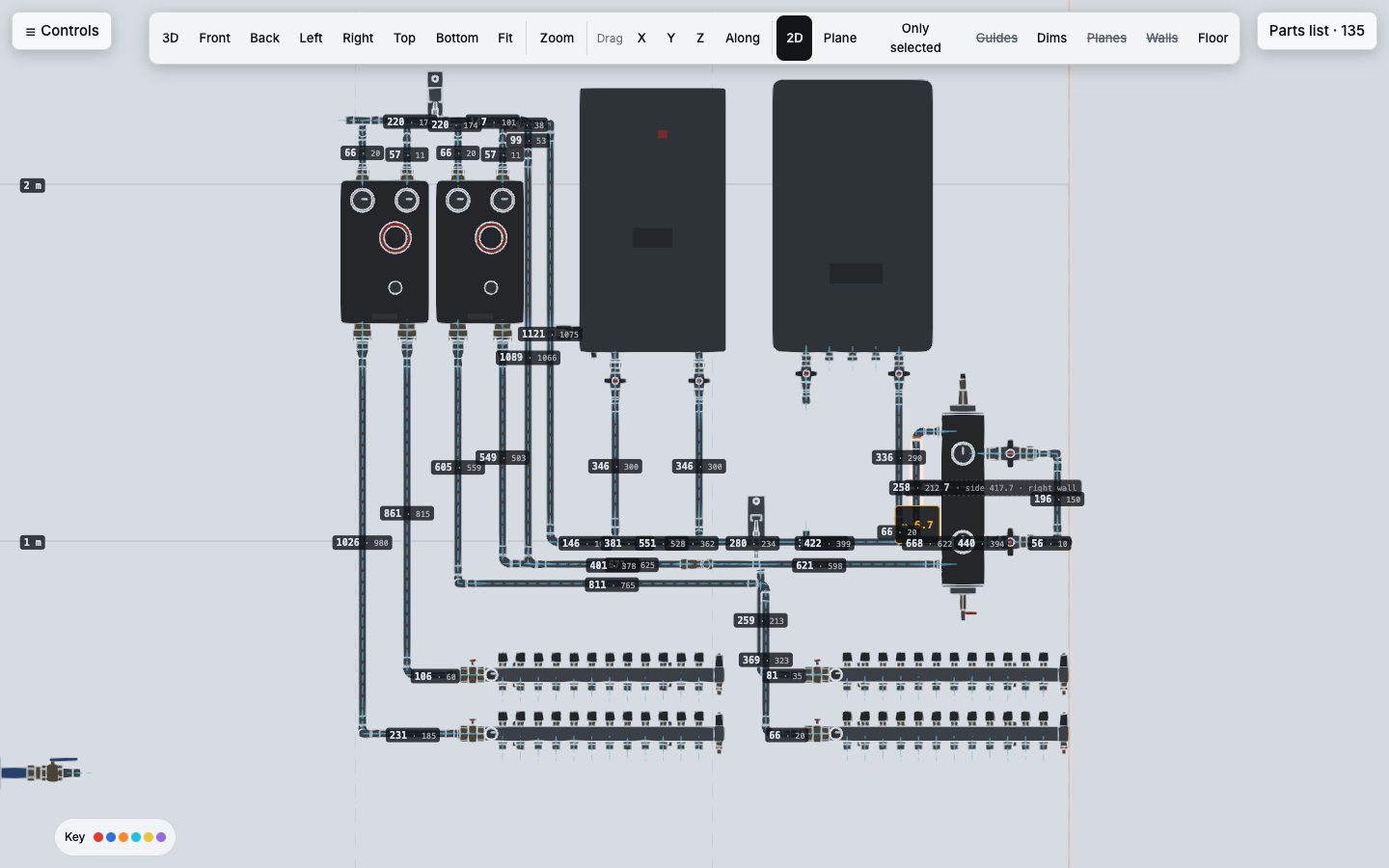
03 · The same build as a 2D front drawing with live pipe lengths and offsets -
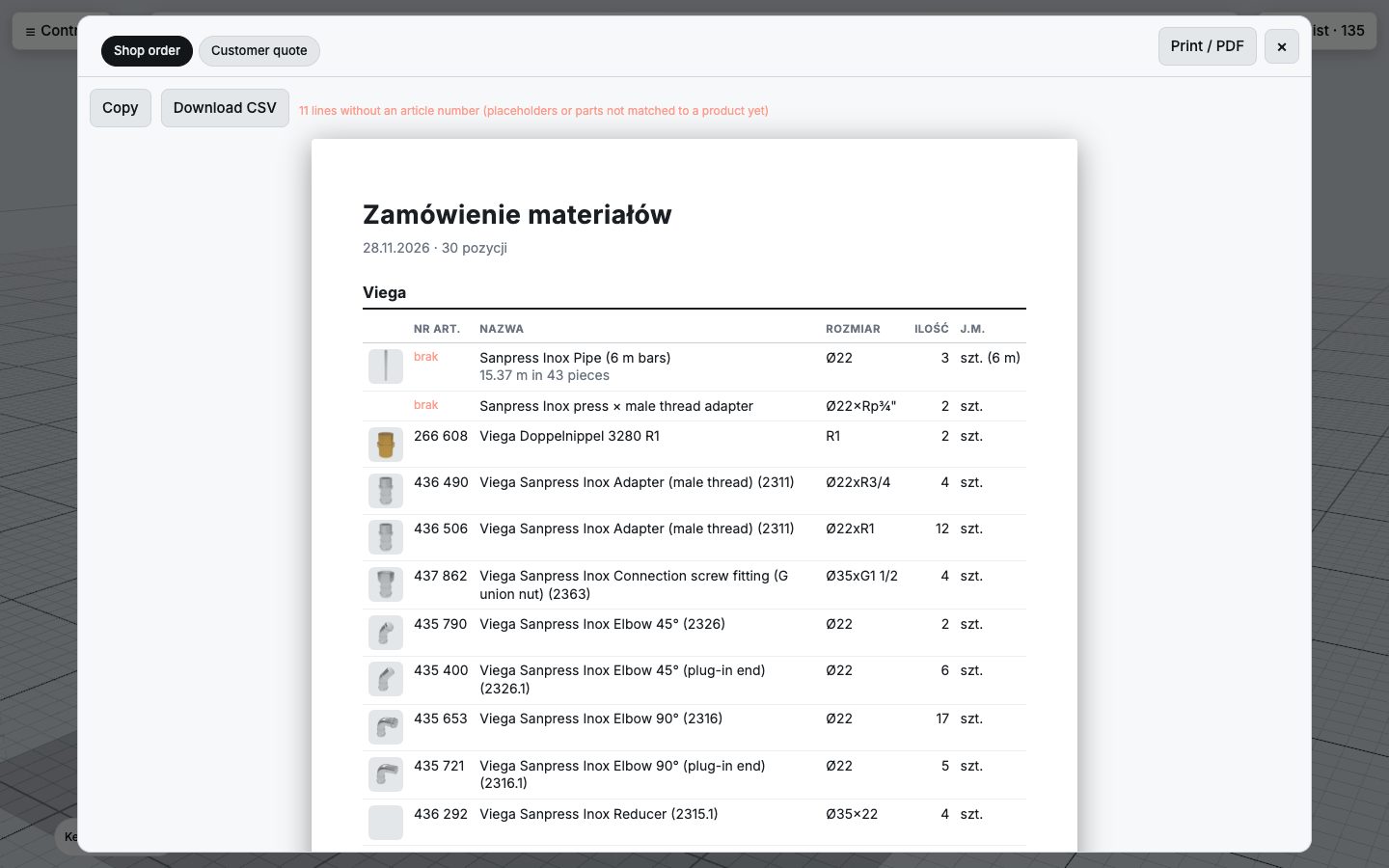
04 · Shop order generated from the model, grouped by supplier, with article numbers
The hard parts
-
01
Pipes that route themselves
Pick two free ports and the tool connects them with straight runs and 90° elbows, allowing for how far each elbow reaches. When the simple path is blocked it searches around obstacles, keeping a set distance from other parts and walls and preferring fewer elbows.
-
02
Joints that have to be real
Each connection knows whether it is press, thread, flange or clamp, its size and which side it is. A joint that cannot exist is marked red and can be fixed in one click, for example by inserting the right thread adapter.
-
03
Move one part, the rest follows
Dragging a pipe stretches the pipes behind it, including diagonal runs after 45° fittings, so every joint stays closed. An elbow can be swapped for a tee in place.
-
04
Cut lengths that match the workshop
The tool knows how deep each pipe sits inside its fitting, and that depth goes into the cut length. The order includes a cutting plan for standard 6 m bars.
-
05
Supports counted too
Where a pipe crosses a support rail the clamp is placed automatically, with a threaded stud of the right length, and the wall anchors are added to the list.
-
06
From model to paperwork
One build gives a parts list, a shop order with article numbers as a spreadsheet file, and a customer quote with discounts, VAT and print layout. Prices are typed in by the installer and stay in the browser.
In numbers
- 135 parts in the boiler room shown
- 850 catalogued sizes across two press systems
- 139 automated tests on routing, joints and lists
- 6 media tracked by colour, from heating flow to gas
stack · Next.js · React · TypeScript · three.js (react-three-fiber) · Zustand · IndexedDB · Vitest
What it
shows
Complex 3D interaction in the browser, backed by real geometry and domain rules, ending in documents a tradesperson can use.